

"Organic traffic is free."
If you've spent any time in marketing, you've heard this. It's become one of those truths people repeat without questioning—like "content is king" or "the customer is always right." The logic seems sound: you're not paying for each click, so it must be free.
Except it isn't. Not even close.
The difference between paid traffic and organic traffic isn't that one costs money and the other doesn't. They both cost money. The difference is how you pay—and understanding that distinction is the key to making smarter marketing budget decisions.
Why People Believe Organic Traffic Is Free
The confusion is understandable. When you run Google Ads, you see the meter running in real time. Every click has a price tag. Every day without conversions feels like money burning. The cost is impossible to ignore.
Organic traffic feels different. You publish a blog post. It ranks. People find it. You don't get an invoice from Google. Nobody sends you a bill for that visitor who arrived through search.
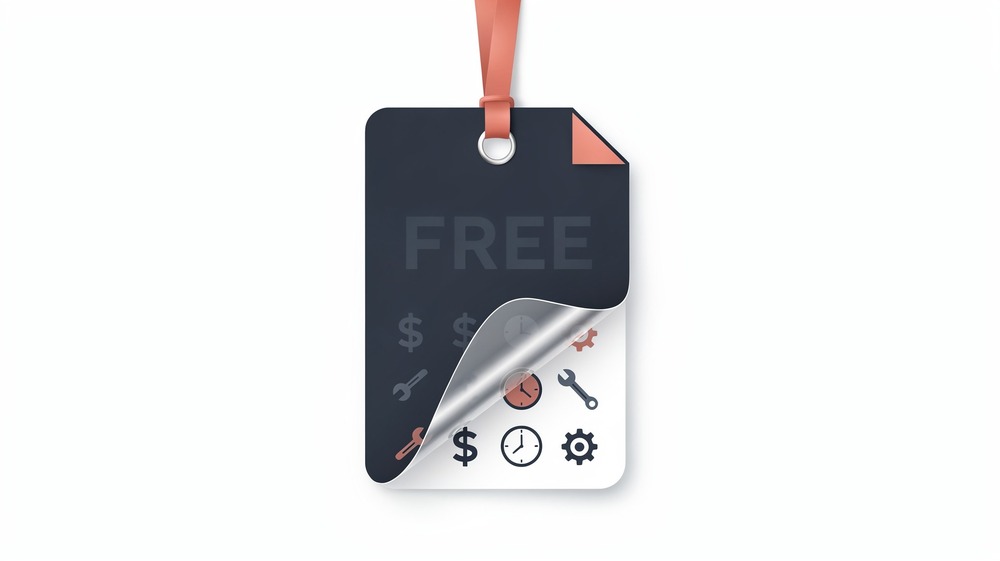
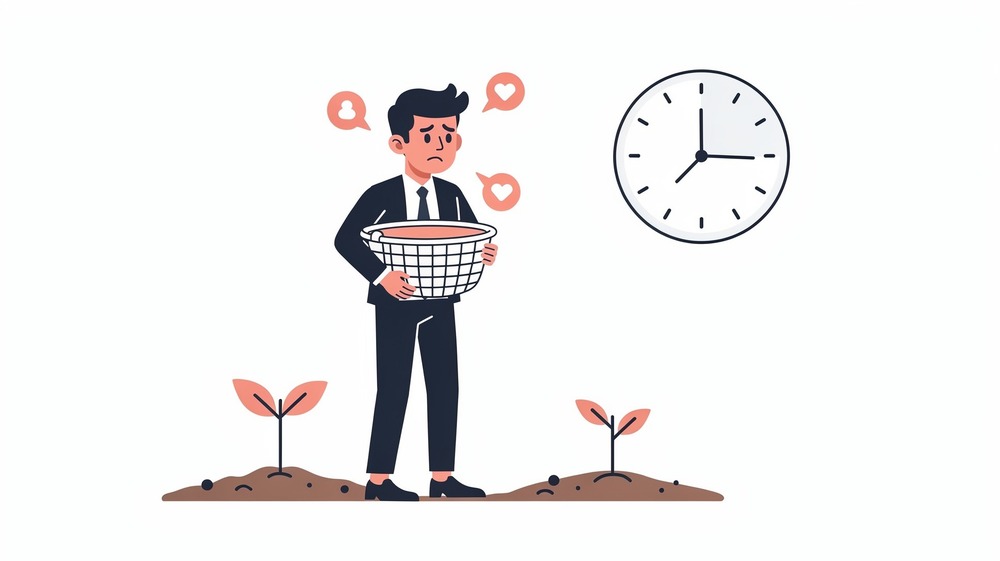
But "no invoice" doesn't mean "no cost." It means the cost is hidden—buried in salaries, tools, time, and opportunity.
The businesses that fall into the "free traffic" trap often underinvest in content, wonder why it isn't working, and conclude that organic doesn't work for them. The real problem is that they treated an investment like a freebie and got freebie-level results.
What Organic Traffic Actually Costs
Let's put some real numbers to this. When you pursue organic traffic through content and SEO, you're paying for several things:
Content Creation
Quality content isn't cheap. According to industry research, the cost of a single blog post varies dramatically based on quality:
- Budget freelancers: $50–$150 per article (often requires heavy editing)
- Mid-tier writers: $250–$600 per article
- Expert-level content: $700–$1,500+ per article
- Full-service agencies: $800–$3,000+ per article
That's per piece. A typical content strategy might publish 4–8 articles per month. At mid-tier pricing, you're looking at $1,000–$4,800 monthly just on content creation.
SEO Services and Management
Content alone doesn't rank. You need keyword research, technical SEO, on-page optimization, and ongoing strategy. SEO pricing surveys show:
- Keyword research: $150–$1,000 depending on scope
- Monthly SEO management: $1,000–$10,000 depending on competitiveness and service depth
- Link building: $500–$2,000 per month for quality backlinks
Tools and Software
SEO tools like Ahrefs, SEMrush, or Surfer SEO run $100–$500+ per month. Analytics platforms, heatmaps, content management systems—they add up.
Time and Opportunity Cost
This is the cost most businesses ignore entirely. If you're doing content in-house, someone's time is going into it. A founder spending 10 hours a week on content strategy and creation isn't "saving money"—they're choosing not to spend that time on sales, product, or fundraising.
Research suggests that SEO research alone can consume 80% of content creation time. For someone billing at $100/hour internally, that's a substantial hidden cost.
The Bottom Line on Organic Costs
When you add it all up, businesses investing seriously in organic traffic typically spend $3,000–$15,000+ per month—sometimes far more in competitive industries.
According to B2B marketing research, the average cost per lead from organic traffic is approximately $147. Not free. Just paid differently.

What Paid Traffic Actually Costs
Paid traffic is more transparent about its costs. You see what you spend, and you know exactly what you got for it.
The Click-by-Click Reality
Recent data from Search Engine Land shows the average cost per click across Google Ads is now $5.26—up nearly 13% from the previous year. But that average hides significant variation:
| Industry | Average CPC |
|---|---|
| Legal Services | $8.58 |
| Dentists | $7.85 |
| Home Improvement | $7.85 |
| Education | $6.23 |
| Business Services | $5.58 |
| Finance & Insurance | $3.46 |
| Arts & Entertainment | $1.60 |
If you're in legal services, you might pay $8–$9 per click. If you're in entertainment, under $2. Industry matters enormously.
Cost Per Lead
Clicks aren't customers. You need clicks that convert. The same research shows the average cost per lead from paid search is approximately $280—nearly double the organic average.
The Meter Problem
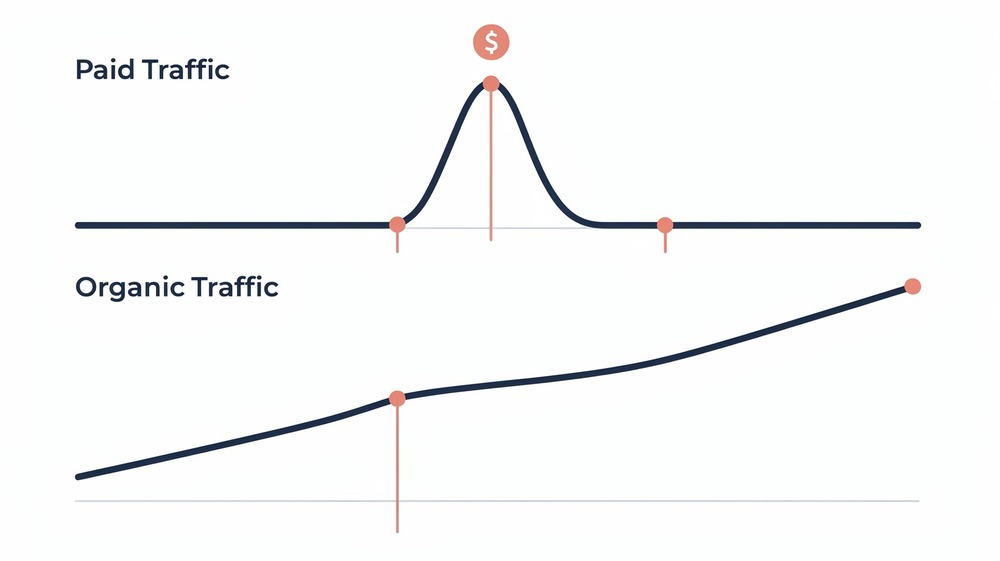
The fundamental characteristic of paid traffic is that it stops when you stop paying. Your $10,000 monthly ad spend generates traffic in January. In February, if you cut the budget, that traffic disappears instantly.
This isn't inherently bad—it's just a different cost structure. But it means paid traffic is pure operating expense. You're renting attention, not building an asset.
The Real Difference: Cost Structure, Not Cost
Here's the framework that actually matters:
Paid traffic is an operating expense. You pay, you get traffic. You stop paying, traffic stops. It's predictable, immediate, and directly correlated to spend. Like renting an apartment.
Organic traffic is a capital investment. You pay upfront to create assets (content, domain authority, backlinks). Returns come later, but those assets continue generating traffic without additional per-click costs. Like buying a house.
Neither is free. They're just different financial instruments.
The Time Factor
This is where the cost structure difference becomes critical.
Research on SEO timelines shows:
- Initial improvements: 3–4 months
- First-page rankings: 6–12 months for competitive keywords
- Full ROI realization: 12–18 months
Content marketing follows similar patterns:
- Early indicators: 3–6 months
- Significant returns: 6–9 months
- Optimal ROI: 12–18 months of consistent effort
Paid traffic? Results start the day your ads go live. You can have leads within hours of launching a campaign.
This time difference isn't a judgment about which is "better." It's a fundamental characteristic of the investment type. Expecting organic results in paid timeframes is like expecting your new house to appreciate 50% in the first month.
The Compounding Effect
Here's what makes organic traffic compelling despite the upfront cost: it compounds.
A blog post you write today might generate traffic for years. That traffic doesn't cost you more per visitor as time goes on—if anything, cost per visitor decreases as the asset matures and ranks better.
Long-term studies suggest that SEO delivers 2.6 times higher ROI than paid search over a 12-month period. The catch is that it requires surviving those initial months of investment before returns materialize.
Paid traffic doesn't compound. Your January clicks don't make February clicks cheaper or more numerous. You're always starting from zero.
When Each Approach Makes Sense
When Paid Traffic Is the Right Choice
Validating demand. Before investing months in organic content, paid traffic lets you test whether anyone actually wants what you're selling. You can validate keywords, messaging, and offers in days rather than months.
Product launches and time-sensitive campaigns. If you're launching next month, organic isn't going to help you. Paid traffic gives you instant reach when timing matters.
Scaling proven funnels. Once you know what converts, paid traffic lets you pour fuel on the fire. If you're profitably converting at $280 per lead and your customer lifetime value supports it, you can scale immediately.
Competitive keywords you can't win organically. Some keywords are so competitive that ranking organically would take years and massive investment. Paid lets you compete immediately while you build organic presence.
When Organic Traffic Is the Right Choice
Building long-term defensibility. Strong organic presence creates a moat. Competitors can outbid you on ads tomorrow—they can't outrank your established content overnight.
High customer lifetime value businesses. If your customers are worth $10,000+, the longer payback period of organic investment makes sense.
Trust-sensitive industries. In some industries (health, finance, legal), organic rankings carry implicit credibility that ads don't. People trust search results more than sponsored listings—approximately 76% of users report scrolling past ads to reach organic results.
Reducing customer acquisition cost over time. If your goal is to lower CAC as you scale, organic is the path. Paid CAC stays constant or increases; organic CAC decreases as content matures.
The Blended Approach
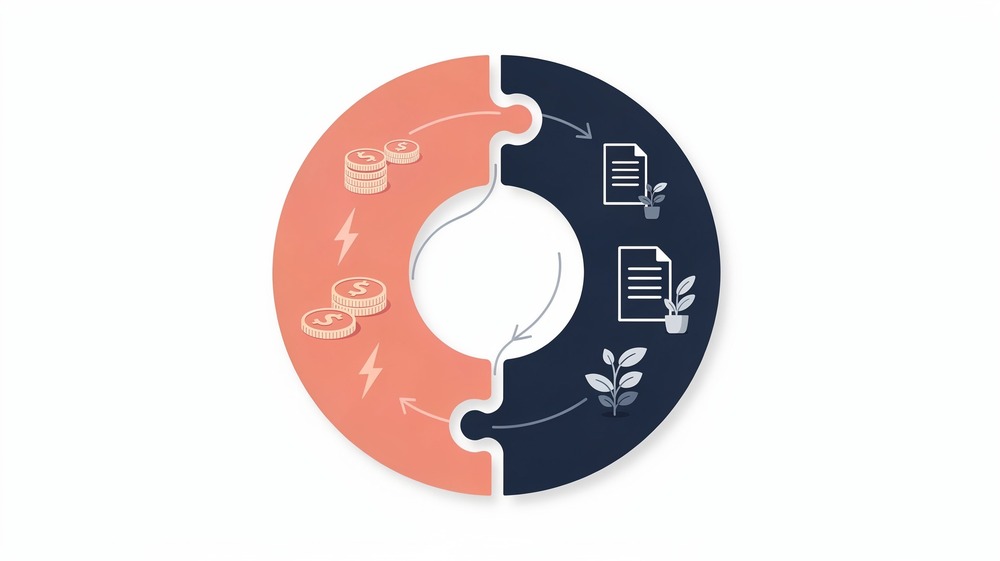
Most successful companies do both. They use paid to validate and scale quickly while building organic assets for long-term efficiency.
A common pattern:
- Launch with paid to prove demand and learn what converts
- Invest in organic targeting the keywords and topics that perform
- Gradually shift budget toward organic as content matures
- Keep paid running for campaigns, launches, and scaling bursts
Common Mistakes
Treating Organic as Free and Underfunding It
If you're spending $10,000/month on ads and $500/month on content, you're underinvesting in organic. That content budget might get you two mediocre articles—not enough to move the needle.
Organic requires real investment. Budget it like you budget ads.
Abandoning Paid Before You Learn Anything
Some businesses try paid traffic for a month, don't see immediate profitability, and conclude it doesn't work. But short paid campaigns often don't give you enough data to optimize.
Paid traffic is a learning machine. Even "failed" campaigns teach you what messaging resonates, which keywords convert, and who your actual buyers are. That intelligence is valuable even if the direct ROI isn't there yet.
Not Tracking True Cost Per Acquisition
Most businesses know their ad spend per lead. Far fewer know their true organic cost per lead—factoring in content, tools, agency fees, and internal time.
Without accurate numbers for both channels, you can't make informed allocation decisions. You're guessing.
Expecting Organic Results in Paid Timeframes
"We tried content marketing for three months and it didn't work."
Three months isn't a content marketing strategy—it's barely an experiment. If you're not prepared for 6–18 months of investment before significant returns, organic isn't the right choice for your situation. That's fine. Just be honest about it.
Practical Takeaways
Calculate Your Real Cost Per Lead
For paid traffic, this is straightforward: total ad spend divided by leads generated.
For organic, it's harder but essential:
- Add up all organic-related costs (content, SEO, tools, internal time)
- Divide by organic leads generated
- Do this monthly to track trends
A Simple Decision Framework
Ask these questions:
How quickly do you need results? If the answer is "immediately," paid is your primary channel. If you can wait 6–12 months, organic becomes viable.
What's your customer lifetime value? High LTV businesses can afford the longer organic payback. Low LTV businesses need the capital efficiency of paid.
What's your risk tolerance? Organic requires sustained investment without guaranteed returns. Paid gives faster feedback loops.
What's your competitive landscape? Some niches are so competitive that organic is a multi-year, high-investment project. Others have opportunities to rank relatively quickly.
The Case for Running Both
If you can afford it, running paid and organic in parallel is almost always superior to choosing one:
- Paid gives you immediate data on what converts
- That data informs your organic content strategy
- Organic builds long-term assets that reduce CAC over time
- Paid remains available for scaling and launches
The businesses that win at digital marketing usually aren't the ones who found the "right" channel. They're the ones who built a diversified acquisition portfolio that balances short-term and long-term investments.

The Bottom Line
No traffic is free. Not organic. Not "viral." Not referral. Everything costs something—money, time, or opportunity.
The question isn't "paid or organic?" The question is: "What's the right investment mix for my business, my timeline, and my risk tolerance?"
Paid traffic is a lever you can pull immediately with predictable costs. Organic traffic is an asset you build over time that compounds.
Both have their place. Neither is inherently superior. The businesses that thrive understand the trade-offs and allocate resources accordingly—without pretending that any traffic shows up for free.
References